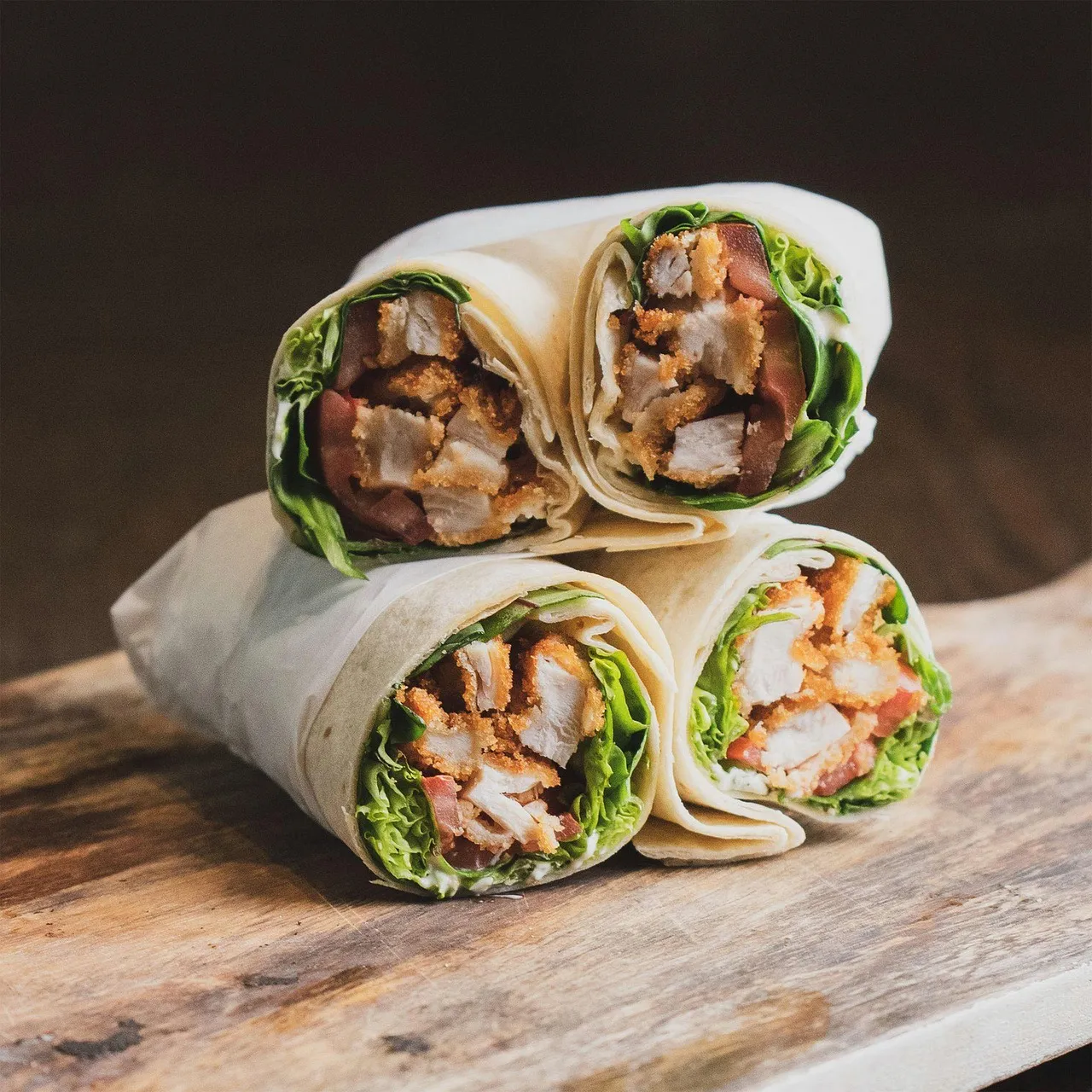
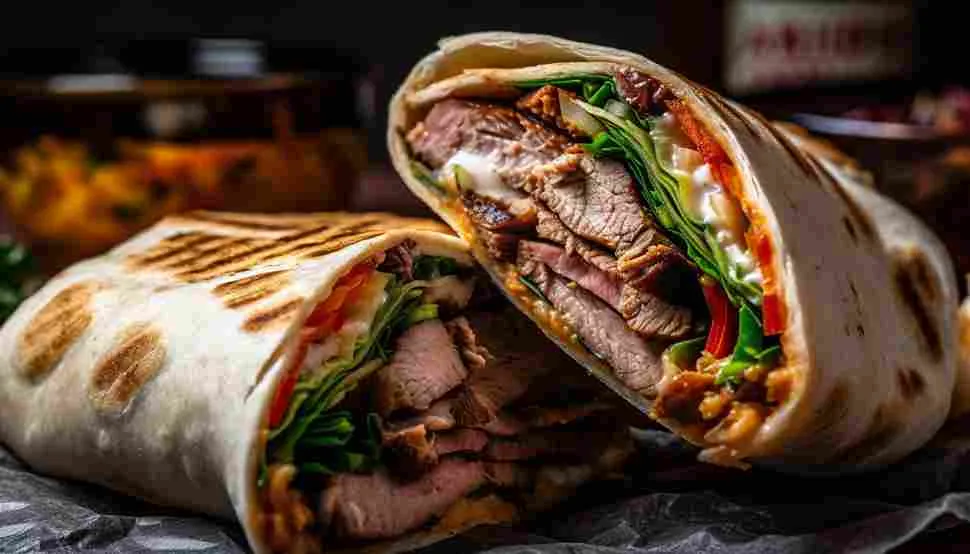
If you have ever stood at a street-food counter comparing shawarma and gyro, you may have wondered what separates these two popular wraps. They look similar, use vertically roasted meat, and often arrive inside warm pita bread. However, their origins, seasonings, meat preparation, sauces, and toppings create noticeably different meals.
The main difference between shawarma and gyro comes down to flavor and preparation. Shawarma comes from Middle Eastern cuisine and typically features marinated slices of chicken, beef, or lamb seasoned with warm spices. Gyro comes from Greek cuisine and usually combines herb-seasoned meat with tomatoes, onions, and creamy tzatziki sauce.
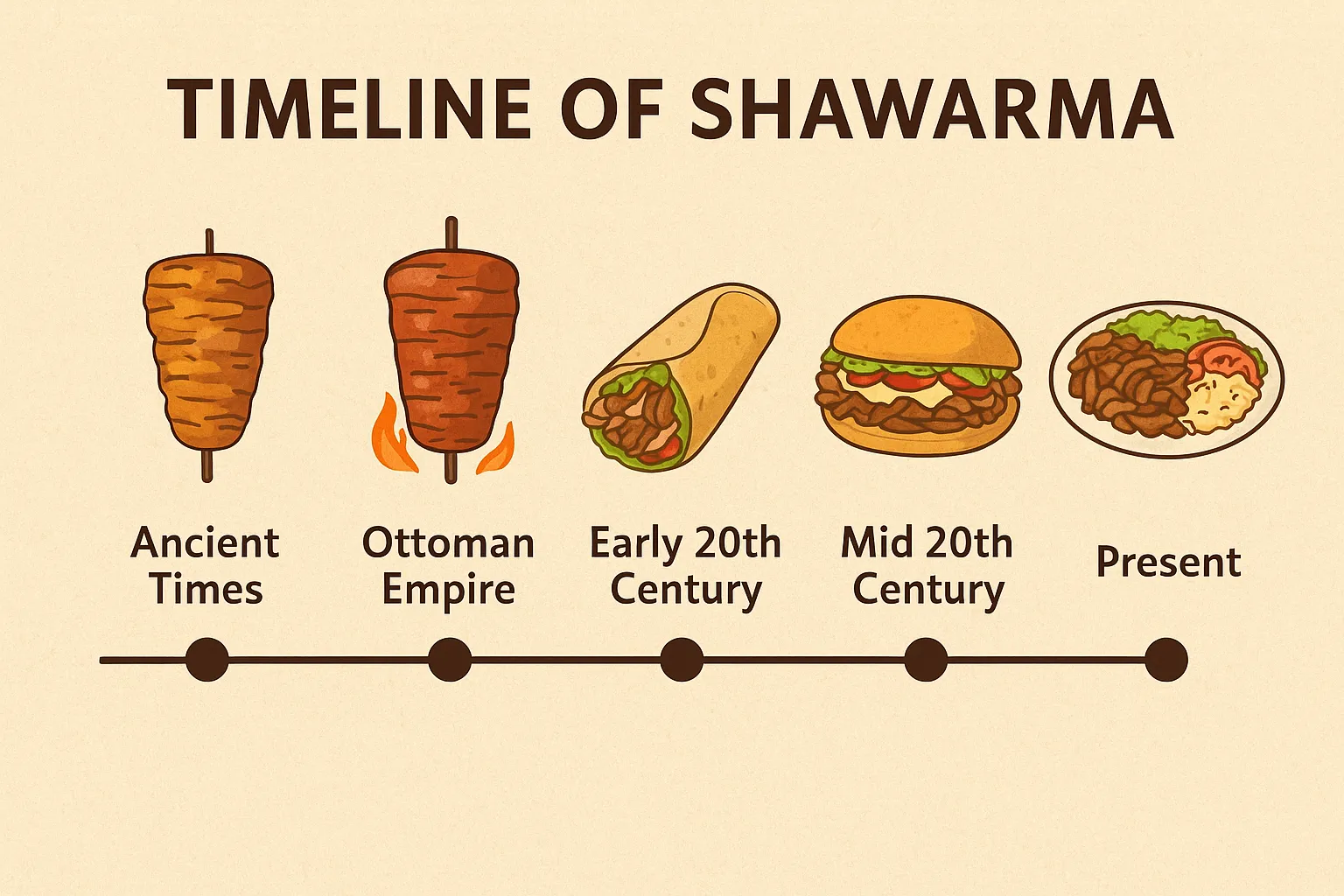
Both dishes share historical connections to the Turkish döner kebab. Over time, different regions adapted the rotating-spit cooking method to match local ingredients and culinary traditions.
Shawarma vs Gyro: Quick Answer
Shawarma usually contains thin slices of marinated meat flavored with cumin, cardamom, turmeric, paprika, cinnamon, garlic, and other aromatic spices. It may include tahini, garlic sauce, hummus, pickles, and fresh vegetables.
Gyro typically uses meat seasoned with Greek herbs such as oregano, thyme, rosemary, and marjoram. It commonly comes with tomatoes, onions, pita bread, and tzatziki.
Shawarma tastes warmer, richer, and more heavily spiced. Gyro tastes lighter, fresher, and more herb-forward.
Where Do Shawarma and Gyro Come From?
Shawarma developed across the Middle East, particularly in Levantine countries such as Lebanon and Syria. Related versions also appear throughout Turkey and other parts of the Mediterranean region.
The word “shawarma” comes from a term associated with turning or rotating. It describes the cooking process in which layers of meat rotate slowly beside a heat source.
Gyro has Greek roots and remains a staple of Greek street food. The word “gyro” means “turn” or “revolution” in Greek, referring to the same vertical cooking motion.
Although both foods use a rotating spit, each cuisine developed its own seasonings, meat choices, sauces, and serving styles.
What Meat Is Used in Shawarma?
Shawarma ingredients vary by country, restaurant, and dietary tradition. Common choices include:
- Chicken
- Beef
- Lamb
- Turkey
- Mixed meats
The cook usually marinates the meat for several hours or overnight. The marinade may contain olive oil, vinegar, lemon juice, garlic, yogurt, and a mixture of Middle Eastern spices.
The marinated slices are layered tightly onto a vertical spit. As the outside cooks, the chef shaves off thin pieces. This method creates tender meat with browned, slightly crispy edges.
Unlike many American-style gyros, traditional shawarma generally does not use a smooth, pre-ground meat loaf.
What Meat Is Used in a Gyro?
Gyro meat can vary depending on where you order it.
In Greece, pork and chicken gyros are widely available. Lamb may also appear, but it is not always the standard choice.
In the United States, gyro meat often consists of seasoned ground lamb and beef pressed into a dense cone or loaf. The meat rotates on a vertical spit and is sliced into thin, uniform strips.
This preparation gives American-style gyro meat a firmer and more consistent texture than the layered slices commonly found in shawarma.
Shawarma vs Gyro Taste and Seasoning
The seasoning creates one of the clearest differences between the two dishes.
What Does Shawarma Taste Like?
Shawarma has a bold, aromatic flavor. Its seasoning may include:
- Cumin
- Turmeric
- Cardamom
- Cinnamon
- Paprika
- Allspice
- Coriander
- Cloves
- Garlic
- Black pepper
These spices create warm, earthy, smoky, and slightly sweet notes. The marinade also helps the seasoning penetrate the meat, giving each slice a deeper flavor.
Chicken shawarma often tastes juicy, garlicky, and lightly smoky. Beef or lamb shawarma may taste richer and more intensely seasoned.
What Does Gyro Taste Like?
Gyro has a fresher, more herbal flavor. Common seasonings include:
- Oregano
- Thyme
- Rosemary
- Marjoram
- Garlic
- Black pepper
- Lemon
- Mint
The flavor is usually savory and herbaceous rather than heavily spiced. Tzatziki adds a cool, creamy contrast that makes the overall dish taste bright and refreshing.
Which is Spicier, Shawarma or Gyro?
Shawarma is usually more intensely seasoned than gyro, but that does not always mean it contains more chili heat.
Warm spices such as cumin, paprika, cardamom, and black pepper give shawarma a stronger and more complex taste. Some recipes also include cayenne pepper or chili sauce.
Gyro is generally milder. Its flavor comes mainly from herbs, garlic, lemon, and the richness of the meat.
The actual heat level depends on the recipe and any sauces added at the restaurant.
Shawarma and Gyro Sauces
Sauces play an important role in the shawarma vs gyro comparison.
What Sauce Comes on a Gyro?
Tzatziki is the traditional sauce most closely associated with gyro. It usually contains:
- Greek yogurt
- Cucumber
- Garlic
- Dill
- Lemon juice
- Olive oil
Tzatziki tastes creamy, tangy, and refreshing. It balances the savory meat and adds moisture to the pita.
What Sauce Comes on Shawarma?
Shawarma may come with several different sauces depending on the meat and region. Chicken shawarma often includes toum, a strong Lebanese garlic sauce made from garlic, oil, lemon juice, and salt.
Beef or lamb shawarma may come with tahini sauce, which combines sesame paste, lemon juice, garlic, and water.
Other possible additions include hummus, chili sauce, yogurt sauce, or regional house sauces. Tzatziki can appear in fusion restaurants, but it is not the standard traditional sauce for shawarma.
Shawarma vs Gyro Toppings
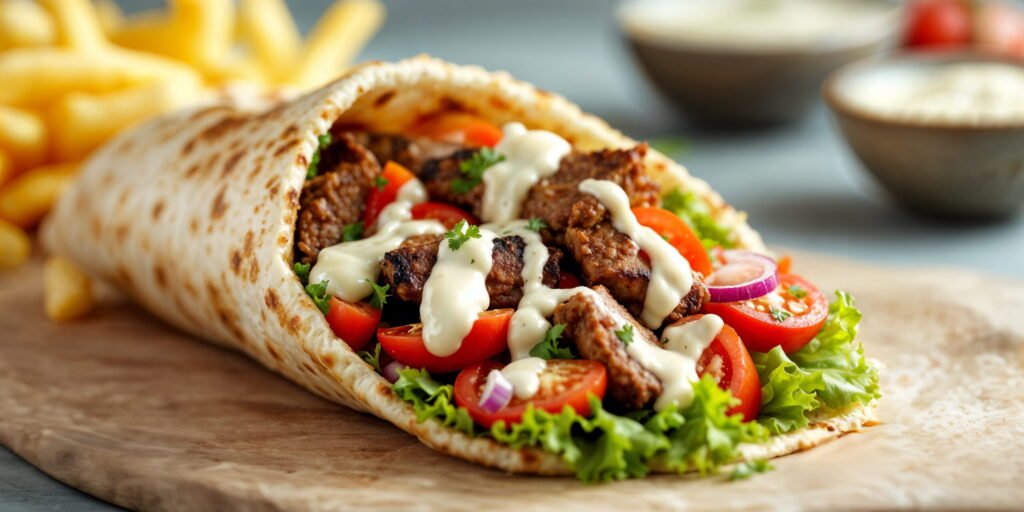
Gyro toppings are usually simple and consistent. A typical gyro may include the following:
- Tomatoes
- Red onions
- Lettuce
- Tzatziki
- French fries
- Fresh herbs
Shawarma offers a wider range of possible toppings and fillings, including:
- Pickled turnips
- Pickled cucumbers
- Tomatoes
- Onions
- Parsley
- Lettuce
- Hummus
- Tahini
- Garlic sauce
- French fries
- Tabbouleh
- Fattoush
The toppings may change depending on whether the shawarma contains chicken, beef, or lamb.
Shawarma vs Gyro Comparison Table
| Category | Shawarma | Gyro |
|---|---|---|
| Origin | Middle East | Greece |
| Common meat | Chicken, beef, lamb, or turkey | Pork or chicken in Greece; lamb and beef mixtures in the US |
| Meat preparation | Marinated slices stacked on a spit | Sliced meat or a ground meat cone |
| Seasoning | Warm and aromatic spices | Greek herbs and garlic |
| Flavor | Rich, earthy, and strongly seasoned | Savory, fresh, and herb-forward |
| Common sauce | Garlic sauce or tahini | Tzatziki |
| Common toppings | Pickles, hummus, vegetables, and herbs | Tomatoes, onions, lettuce, and fries |
| Bread | Pita, flatbread, or saj bread | Pita bread |
| Typical texture | Juicy slices with crispy edges | Dense and uniform or thinly sliced, depending on the style |
Shawarma vs Gyro Similarities
Despite their differences, shawarma vs gyro share several important qualities.
Both use a vertical rotisserie that allows the outside of the meat to brown while the inside remains juicy. The chef slices off the cooked exterior and leaves the remaining meat to continue roasting.
Both dishes are also popular street foods. They are portable, filling, customizable, and easy to serve inside pita or flatbread. Each meal usually combines meat, vegetables, sauce, and bread. This combination provides contrasting textures, including crispy meat edges, soft bread, fresh vegetables, and creamy sauces.
Is Shawarma the Same as Gyro?
No, shawarma is not the same as gyro.
They share a similar cooking technique, but they belong to different culinary traditions. Shawarma uses Middle Eastern marinades, spices, sauces, and toppings. Gyro uses Greek herbs and commonly includes tzatziki, tomatoes, and onions.
The meat preparation may also differ. Shawarma generally uses stacked slices of marinated meat, while many American gyros use a processed mixture of ground lamb and beef. They are related dishes, but they should not be treated as interchangeable.
Which Is Better: Shawarma vs Gyro?
Neither dish is automatically better. The right choice depends on the flavors you prefer. Choose shawarma when you want bold spices, strong garlic flavor, tangy pickles, and several possible sauces or toppings.
Choose gyro when you want savory meat, fresh herbs, cool tzatziki, tomatoes, and onions. Trying both dishes side by side is the easiest way to understand the difference between shawarma vs gyro.
Frequently Asked Questions | Shawarma vs Gyro
What’s the difference between a shawarma and a gyro
Shawarma is a Middle Eastern dish made with marinated slices of meat, warm spices, and sauces such as tahini or garlic sauce. Gyro is a Greek dish typically seasoned with herbs and served with tomatoes, onions, and tzatziki.
What is Shawarma Food?
Shawarma is a traditional Middle Eastern street food made of thinly sliced, marinated meat—such as chicken, beef, or lamb—that is slow-roasted on a rotating vertical spit. As the meat cooks in its own juices, the tender outer layers are shaved off and typically served wrapped in a warm pita or flatbread.
It is commonly garnished with fresh vegetables, pickles, and flavorful spreads like garlic sauce (toum), hummus, or tahini.
Is shawarma healthier than gyro?
The nutritional value depends on the meat, serving size, sauces, bread, and toppings. Grilled chicken shawarma with vegetables may contain less saturated fat than a lamb-and-beef gyro, but heavy sauces and large portions can increase calories in either dish.
Is gyro made with lamb or beef?
American gyro meat often combines ground lamb and beef. In Greece, pork and chicken gyros are also common.
Is shawarma made with ground meat?
Traditional shawarma usually consists of thin slices of marinated meat stacked on a vertical spit. However, recipes and restaurant preparation methods can vary.
Are shawarma and gyro served in the same bread?
Both may come in pita bread. Shawarma can also be served in other flatbreads, including saj or lavash-style bread.
Is gyro the same as shawarma?
No. Gyro and shawarma use a similar vertical-spit cooking method, but they differ in origin, seasoning, meat preparation, sauces, and toppings.
Does shawarma use different spices than gyro?
Yes. Shawarma commonly uses Middle Eastern spices such as cumin, cardamom, turmeric, paprika, and cinnamon. Gyro usually uses Greek herbs such as oregano, thyme, rosemary, and marjoram.
What sauce is used for shawarma?
Chicken shawarma often comes with garlic sauce, while beef or lamb shawarma may include tahini. Some restaurants also offer hummus, chili sauce, or yogurt-based sauces.
What sauce comes on a gyro?
Gyro commonly comes with tzatziki, a creamy Greek sauce made with yogurt, cucumber, garlic, dill, lemon juice, and olive oil.
Which is spicier, shawarma or gyro?
Shawarma usually has a stronger spice profile. It may contain cumin, cardamom, paprika, cinnamon, and black pepper. Gyro is generally milder and relies more on oregano, thyme, garlic, and other herbs.
Final Thoughts
The shawarma vs gyro debate becomes much easier once you compare their flavors. Shawarma offers marinated meat, aromatic spices, garlic sauce, tahini, and pickled vegetables. Gyro delivers Greek herbs, savory meat, fresh vegetables, and cooling tzatziki.
Both dishes use slow-roasted meat and warm bread, but their seasonings and toppings give them distinct identities. Choose shawarma for a deeper, spiced flavor or gyro for a milder, herb-driven meal.